Pull a 13.25x13.25x4 filter out of any return grille in South Florida and there’s a decent chance you’ll find the arrow pointing the wrong direction. We see it constantly in older homes and brand-new builds alike, even in houses where someone just swapped the filter last week. It’s the easiest HVAC mistake to make, and it quietly chokes airflow the entire time it goes unnoticed. Skipping regular duct maintenance causes similar trouble, though a backwards filter usually gets there faster. Two minutes of attention now saves you the hassle later.
TL;DR Quick Answers
Arrow direction: points toward the furnace or blower, every time.
Symptoms to watch for: weaker airflow and a blower working harder than it should.
Visual tell: pleats bowed outward toward the room mean it went in backwards.
The fix: power off, flip it so the arrow faces the blower, slide it back in. About two minutes.
Replace instead of flipping when the filter is torn or caked with dust on what should be the clean side.
Top Takeaways
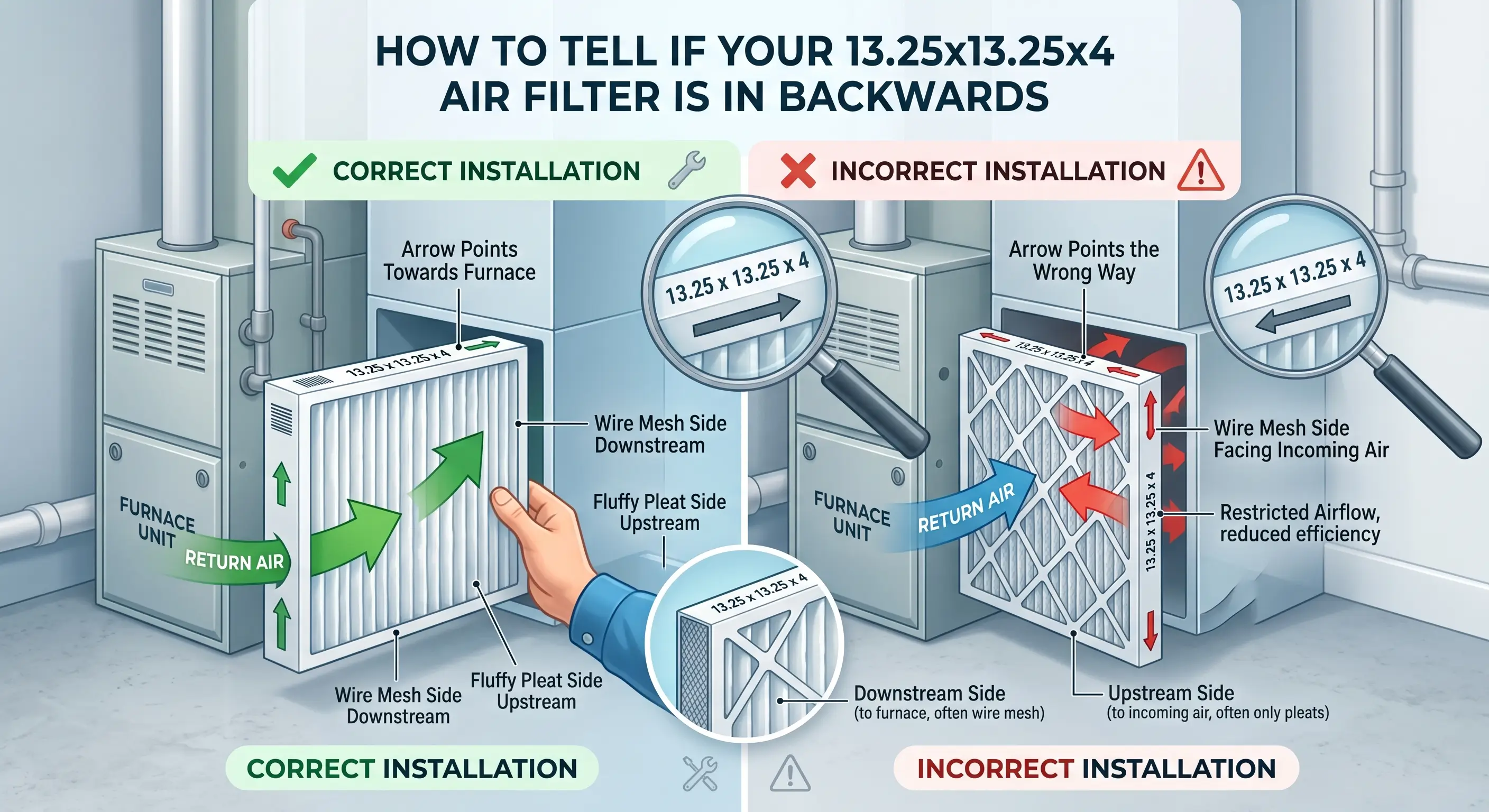
The printed airflow arrow on a 13.25x13.25x4 filter always points toward the furnace or blower, never back toward the room.
A reversed filter chokes airflow and strains the blower motor, and dust starts piling up on what should be the clean side.
Bowed pleats are the visual giveaway. If the media is caving toward the room, the filter went in backwards.
Delray Beach homes feel this faster. Year-round AC runtime means the damage compounds quickly.
When a filter is torn or deeply clogged, replace it. Don’t just flip it.
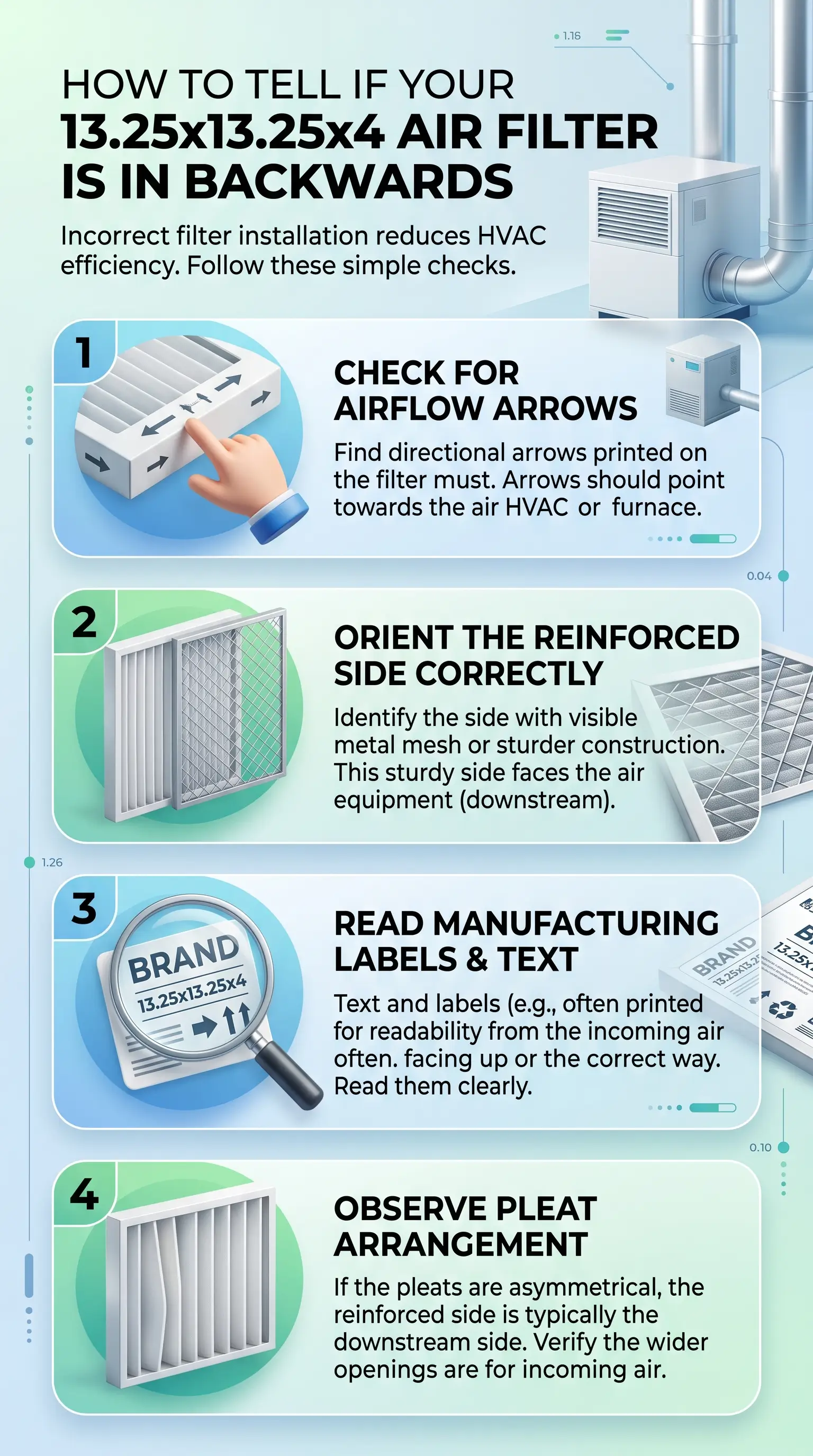
Every pleated filter has a correct direction. The media layer faces the incoming air, and the wire grid behind it supports the pleats as air pushes through. Install the filter backwards and that same wire grid is now fighting the airflow while dust piles up on the side that was meant to stay clean.
Here’s how to check yours in under a minute:
Turn off the HVAC at the thermostat.
Slide the filter out of the return grille or air handler slot.
Look at the frame edge for the printed airflow arrow.
Make sure that arrow points toward the furnace or blower, not back into the room.
If it’s backwards, flip it and reinstall. If it looks bent, collapsed, or dirty on the clean side, swap it out for a new one.
A pleated air filter pulls air through layered media that can trap particles down to about 0.3 microns. Direction is central to how the whole thing works. Before you shop for a replacement, match your existing frame size exactly. A quarter-inch gap is enough to let unfiltered air bypass the media entirely. Common formats run across 1-inch filter sizes and 2-inch filter sizes, while this thicker filter guide covers 4-inch setups like the one you’re working with.
If yours shows damage or you’re already overdue, a set of fresh pleated 13.25x13.25x4 air filters with a clearly printed airflow arrow on the frame will keep you from making this mistake twice.
“Check the arrow every single time you swap a filter. In fifteen years across Palm Beach and Broward, I’ve traced more blower-motor failures back to reversed filters than to any other single cause.”
7 Essential Resources
EPA — Guide to Air Cleaners in the Home (epa.gov)
ENERGY STAR — Heat & Cool Efficiently (energystar.gov)
U.S. Department of Energy — Air Conditioner Maintenance (energy.gov)
American Lung Association — Air Cleaning (lung.org)
ASHRAE — Filtration & Disinfection Resources (ashrae.org)
NAFA — Best Practice Guidelines (nafahq.org)
NADCA — Homeowner’s Guide to Clean Indoor Air (nadca.com)
3 Statistics (with verified sources)
Americans spend roughly 90% of their time indoors, which makes home filtration one of the biggest levers on personal air quality. Source: EPA Guide to Air Cleaners in the Home.
Nearly half of the energy used in a typical U.S. home goes to heating and cooling. Anything that restricts airflow, including a reversed filter, shows up on your utility bill. Source: ENERGY STAR: Heat & Cool Efficiently.
Cleaning or replacing a dirty air-conditioner filter can cut energy consumption by 5 to 15 percent. Source: U.S. Department of Energy, Home Cooling 101.
Final Thoughts and Opinion
The backwards-filter problem is one of the most fixable HVAC issues in any home, and also one of the most overlooked. Installed correctly, a filter protects your blower motor and steadies the airflow across your whole system, which adds years to equipment that would otherwise wear out fast. For a belt-and-suspenders approach, pair clean filtration with UV light purification for microbial control, and keep a few air filtering plants around the living room. Two minutes of attention now saves you hundreds in repairs and higher energy bills later.
Frequently Asked Questions
Which way should the arrow point on a 13.25x13.25x4 air filter?
Toward the furnace or blower, in the same direction air is moving through the system. The arrow tracks airflow, so it always faces away from the room the filter sits in.
What happens if I run my AC with the filter backwards?
Airflow drops noticeably and the blower has to strain harder to compensate. Dust builds up on what should be the clean side because the filter media can’t catch it properly anymore. You usually notice it as a slow creep in your energy bills and weaker cooling over the course of several weeks.
Can a backwards filter damage my HVAC system?
Yes, though usually not overnight. Sustained airflow restriction puts the blower motor under constant extra load, which means the evaporator coil can freeze during cooling cycles and moving parts wear out faster than they should. If your filter has been running reversed for weeks, you may find yourself checking HVAC repair estimates or pricing out AC repair quotes. In worse cases, homeowners end up looking at HVAC replacement services when the damage outruns what a standard repair can fix.
How often should I replace a 13.25x13.25x4 air filter in Florida?
For most homes, every 3 to 6 months. Swap it sooner if you have pets or if your system runs near-constantly, which is common for Florida homes anywhere close to the coast. Check the filter every month. Hold it up against a plain white sheet of paper, and if it’s turned visibly gray, it’s time for a new one.
Are 13.25x13.25x4 filters the same as 13x13x4?
No. Even a quarter-inch of difference creates bypass gaps, and unfiltered air sneaks right around the frame. Always match the nominal size stamped on your filter housing.
Ready to Check Your Filter?
Check your filter right now. Slide it out and look at the arrow on the frame. If that arrow is pointing back at the room, you’ve found your problem. Flip the filter so the arrow faces the blower, and slide it right back in. If your current filter is torn, caked with dust, or well past its replacement date, grab a fresh one or order bulk filter packs to stock up for the year. Set a monthly reminder on your phone, because catching this early is what keeps your HVAC bills from creeping up on you.
Learn more about HVAC Care from one of our HVAC solutions branches…
Filterbuy HVAC Solutions - Miami FL - Air Conditioning Service
1300 S Miami Ave Apt 4806 Miami FL 33130
(305) 306-5027
https://maps.app.goo.gl/Ci1vrL596LhvXKU79